Why ChatGPT can’t give you a personality
And why personality is everything in a speech
Nov 19, 2026


Written by
Tyler BroomeHello, world.
While I’ve been getting Ars Rhetorica running, I’ve been trying to work out how to advertise. One suggestion was writing blog posts to share tidbits about what makes speech and document preparation so important. So, consider this the first in what will hopefully be a series of musings about topics to do with writing or delivering speeches and documents.
For the first topic, I thought it’d be interesting to address one of the biggest questions I get asked when I introduce Ars Rhetorica: “can’t I just get ChatGPT to write me a speech?”
“Of course you can,” I answer, somewhat sardonically – I’ve never kept my concerns about AI a secret. “But it’ll never give you a personality.”
But what do we mean when we talk about AI writing lacking a “personality?” And what difference does it make when a speech or piece of writing has personality?
What’s in a personality?
My answer starts by taking us back about 2,500 years to ancient Greece. A famous philosopher named Aristotle wrote a treatise which provides an origin for a lot of the conceptual thinking about persuasive argument in the Western world: today, we call it the Art of Rhetoric (the Latin translation of this title, Ars Rhetorica, is the namesake of this business). Aristotle breaks persuasion down into three different modes: logos, the appeal to facts; pathos, the appeal to feelings; and ethos, the persuasiveness derived from the speaker’s character.
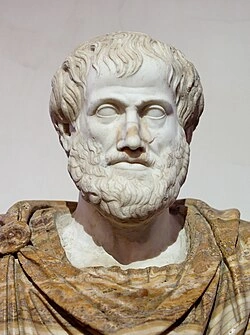
In Aristotle’s opinion, a persuasive speaker with strong ethos should be knowledgeable enough to form correct opinions, upstanding enough to want to do the right thing, and kind enough to give the best advice. Without getting into the philosophy of what it means to be a good person, the important takeaway is that when we’re trying to persuade someone, we need to make them feel like we’ve done our homework and are familiar with what we’re arguing, and that we have their best interests at heart. We also need to be careful that our language and speaking style don’t come across as artificial. In Aristotle’s words: “that which is natural persuades, but the artificial does not.”
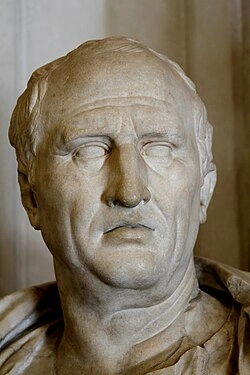
Fast-forward another 300 years, and we meet a man named Marcus Tullius Cicero, one of ancient Rome’s most famous lawyers, politicians, and speakers. Cicero’s innovation, in particular in his treatise On the Ideal Orator, was to highlight how a person’s ethos – the persuasiveness of their personality – comes from the character they have developed through their entire life, and that their speech will only be persuasive if their point lines up with how they act day-to-day. In short, the reason why we listen to someone and find them persuasive is because we feel like their words are genuine.
That brings us to the modern day, and the question of what it means for a document or speech to have personality. One of the biggest things that sets a good speech apart is when you can tell that the presenter genuinely believes in the point they’re making, and their experiences as a person back that up. That doesn’t necessarily mean that you need to write a speech yourself for it to genuinely express who you are. If that was true, speeches from politicians, corporate executives, and activists everywhere would be quite different. Instead, it’s important that whoever is helping write your speech captures what makes you, you!
At Ars Rhetorica, every project starts with a meeting with the client. Whether we’re writing a wedding speech, a grant proposal, a conference address, or an elevator pitch, it’s crucial to find out what the presenter is like, and who they’re presenting it to. There’s nothing worse than giving a speech full of jokes to someone who prefers to present themselves as very proper. Likewise, even the most technically nice, serious speech is going to miss the mark if it’s read out by someone who likes to be the comedian of the group. At its core, this is what it means for writing to have a personality: we make sure that whatever point you’re making feels genuine, shows that you care about the topic, and, most importantly, matches in style to how you act in your day-to-day life.
The pitfalls of AI writing
And now we come back to the big question: why can’t AI write something that shows personality?
To its credit, AI-generated writing is getting harder to spot. Studies in 2024 indicated that humans can only identify AI-generated text about 53% of the time, and models have only been improving. But, in my opinion there are three main reasons why AI-generated writing struggles:
1) The way AI constructs a piece of writing relies on formulas, rather than natural speech patterns
2) AI models are learning how to write from a range of sources, so they struggle to pick up on your unique qualities
3) AI systems don’t have access to a lot of the contextual information that we use in a speech or conversation to create meaning.
Writing as a formula
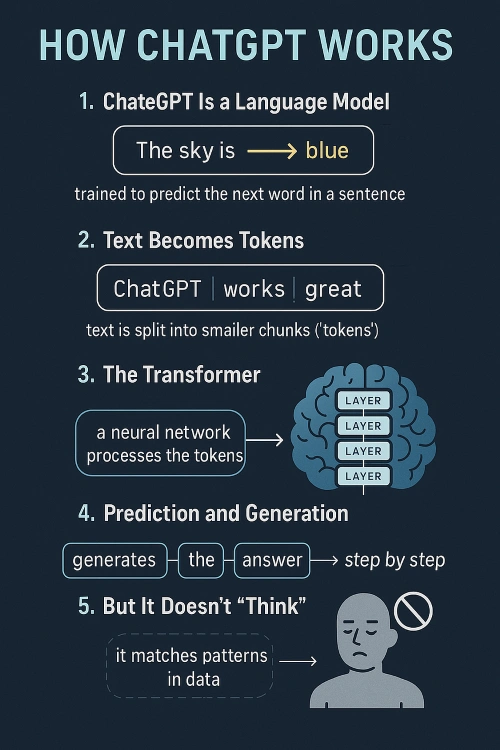
AI language models like ChatGPT are essentially next-word prediction engines. They work by breaking down your prompt and using every piece of data they’ve been trained on to guess what the best fitting next word is. That’s great if we’re writing something that should be fairly formulaic, like computer code. However, it starts to fall apart when the formula isn’t prepared. For example, if you’re preparing a grant and want to connect the importance of your proposal to current events, ChatGPT won’t know what those events are. Or, if you’re writing a speech for a wedding and want to tell a story, you’d need to type the entire thing out to ChatGPT, so why not write the whole speech instead? The ability to interpret new information and break away from formulaic writing to suit the purpose of your writing is still one area where human writers beat AI.
On top of that, because of how language models learn to structure their writing, certain phrases and patterns have become associated with AI writing. Think things like “it’s not only X, it’s also Y” kind of statements, or lists of three things that seem barely related. The cruel irony is that those patterns were learned from talented human writers, to the point where people who would normally use them have had to change their style to keep their work looking “human.” However, this is another area where it can help to hire a human writer: since we can recognise the hallmarks of AI writing, we can help avoid those qualities creeping too heavily into your documents.
Learning from the masses
Because AI language models learn to write formulaically, one of the big dangers of using them is that the finished product will never quite sound uniquely “you.” It could be that the AI model uses words or turns of phrase you’d never use naturally; for example, words like “delve” became more popular because of their regular use by AI. Or, it could write at a different pace than what you’re used to speaking: studies have found that AI-generated language has a narrower range of sentence length, throwing off our more variable natural speaking rhythm. Linking back to Aristotle and Cicero, the problem this causes is that when we deliver our speech or discuss the document we’ve prepared, it isn’t going to come across as genuine. That glimpse of personality is a big part of what makes us persuasive. On the other hand, human writers are better equipped to put together something that reads or sounds nice, but still reads like it’s genuinely come from you, and that makes a big difference to your confidence when you present the work, and to how convincing it is to other people.
Missing context
The final, and arguably most significant pitfall of AI-generated writing is its inability to take context into account. Research shows that language models struggle to understand humour, empathy, and cultural nuance, all very important things for speeches in particular. Outside of this, language models operate without an understanding of the context you’re writing for. Imagine you’re preparing a speech for your friend’s wedding, and you want to talk about the classic embarrassing story they’ve become famous for in your group. Quite often, those stories can get a little challenging to tell without offending or humiliating someone. But, can you trust ChatGPT to tell the story in a way that gets the joke across but doesn’t ruin the night?
The other major issue stemming from context is that when we present a speech or have a conversation, a lot of the heavy lifting in terms of interpreting meaning is done by non-verbal cues like body language. To see this in action, most people won’t need to look any further than their text messages to find something that came across as a bit rude, but would’ve been perfectly fine if it was said in person. This is one of the strengths of human writers, who can account for the contents of a speech, and also the setting the speech will be presented in. It’s also why, at Ars Rhetorica, we like to meet with clients to practise their speeches before they deliver them. Not only do you become more confident in speaking, but we can make sure we’ve written something that meshes with how you present yourself.
Will AI drive writers extinct? Maybe, but not today
And with that, my tirade against AI writing comes to an end. Don’t get me wrong, I think there is value in AI as a tool: people with dyslexia, for example, benefit strongly from AI-assisted writing and reading. But, in most situations where you need to be convincing in some way – anything from writing a grant, to giving a light-hearted wedding speech, to speaking out about an issue affecting you – you need that injection of personality that AI writing tools can’t yet provide. That’s why, from the day I started Ars Rhetorica, I was committed to not using AI at any stage of the process. It might slow things down a little, but at the end of the day, communication is inherently human, and in my opinion at least, it should stay that way.